English

back to adventures

Pescarte all over the world. Join us and be our friend. You are quite welcome!

TARPON, THE SILVER KING
Roberto Ferrario

Tarpon is one of the most fascinating and exciting saltwater fish thanks to its fighting characteristics.


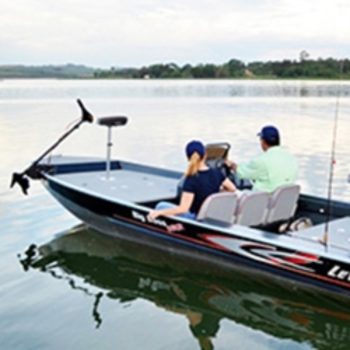
After a brief run out to the fishing grounds the engine is quieted. The light rod coupled with a small reel is slowly removed from under the gunnel and armed with a yellow surface popper. The search begins. Arms are flexed and the push pole bends, silently propelling the skiff in search of the elusive tarpon.

Three brown pelicans sweep low along side our skiff. They beat three long stokes upwards in unison. Once. Twice. Now gone. Left behind is the low sound of the gentle clear warm water quietly lapping against the hull. Eyes strain in the first light for something which to focus upon. A tarpon breaks the surface and disappears into concentric rings. Another fish rolls further out. You can see the passing pod's silhouette through the translucent water.

A perfect cast and I start to animate the popper. A short hard tug on the line and the rod bends. The feeling is unmistakable. A moment later the water erupts in an explosion. The air is full of fish. The rod bends deeply with a great heaviness on the end. The line shears through the water and sounds like a ripping bed sheet. The reel spins wildly. A tarpon is on.

After three majestic jumps the fish sounds with surging energy and charges off like a locomotive. The line is surrendered and retaken. The tarpon breaks the surface for a gulp of air and then submerges with liquid fury. The rod bends and recovers. The tarpon twist and turns as she tries to get away from the mysterious power holding her.

The battle is over in twenty minutes. The magnificent fish is eased to the side of the boat to be admired. The silver sides of the tarpon seem to drain back into the water. Her fins seem almost transparent. That huge eye stares in wonderment. After pausing for a brief moment she is gone to be reclaimed by the sea. Only her memory remains.

Tarpons are true stars, not only because of their powerful runs and spectacular jumping, but because they can be found in different locations that give the opportunity to use the whole range of tackle. Fly, spinning, bait casting, trolling, plus other structures, give anglers every choice. They can be caught in daylight or night.

In the world exist two species of tarpon one in the Atlantic ocean (Megalops Atlanticus) and the other one in the Indo-Pacific ocean (Megalops Cyprinoides); the former is the most famous and fished and can reach a weight of 130 kilograms, the latter is not too fished and it is enough rare and can arrive at a maximum weight of 13 kilograms.

The tarpon is a great fish that does not deserve Ernest Hemingway’s description "a leaping slob". Surely he would retract those words if he came back with the opportunity to fish them with light balanced tackle.

Tarpon raise fishermen’s blood pressure when sighted because on their rolling on the surface as they take in "air". Sometimes, as in the harbors at Key West, the rolling fish can be frustrating because of their lack of interest in offerings of usually successful flies, lures or baits presented with the angler’s best intention.


Old and successful tarpon recreational fishing industries have long been established in Florida and Caribbean countries. Changes in their water environment have meant that some areas are now non-productive. Fishing pressure and other changes have influenced tarpon aficionados to look farther afield. The result is that in Costa Rica and Mexico are just two countries benefiting from the presence of the silver king. Casa Mar Fishing Club in Costa Rica is one of the five camps and lodges complete with skiffs and boats specializing in tarpon and snook from oceans and rives on all light sportfishing tackle to give their guest happy memories. Other well know central American spots are Belize, Bahamas, Honduras, Venezuela Puerto Rico and Cuba, French Guyana.

In these last years some west African coast fishing lodges have started proposing tarpon fishing at their clients obtaining very good results. A well presence of tarpon is found in Guinea Bissau, Gambia, Sierra Leone and Gabon.

Fly fishing is considered by its devotees as the best way to fish tarpon, but other methods are also successful and exciting. Drifting with live bait in the inlets and channels on Florida’s west coast was one of the original methods of tarpon fishing. Live mullet, live shrimp, pinfish and blue crabs are successful live baits, as are cut mullet drifting or at anchor. Sometimes the run as the bait is taken is an unwanted shark, but often it is the hoped for tarpon.


These baits are also drifted from small floats in the east Florida channels between the keys and bridges at night as well as during the day. Tarpon also take flies at night. Night fishing, when sights and sounds are two or three times as intense and the water itself takes on a primitive life of its own, is always thrilling, particularly in the marine jungle of the tropics, but tarpon fighting and jumping in the moonlight are especially exciting.

Spinning tackle with weighted lures trimmed with feathers are productive in the typical fly fishing locales.

Despite the charm of other methods, many anglers enjoy trolling for tarpon on baits or lures. Trolling lures such as minnows and spoons are used with bait casting tackle as well as other conventional trolling rigs.

The channels that are drop-offs from shallow banks are the cruising haunts for tarpon, as are the deeper holes on the bonefish, permit flats. In a behavior believed at times to be associated with readiness to spawn, the tarpon circle anti-clockwise in a "daisy chain". At this time the fly fisherman casts on the outside of the circle where the fly can be seen clearly by the circling tarpon.

For the fly fishing you need a 9½’ or 10’rod with a reel that can contain a 10-11 tip and 250 meters of 30 pound backing. Leaders of 16 and 20 pound are the most used as well as flies from 1/0 to big poppers on 6/0 hooks; some of the best are Stu Apte tarpon Cockroach and red/black Grissley, Poon Food, Leemay Grizzly. The best colors are normally the clear ones and sometimes the fluorescent pink, green or dark ones.

The lovers of spin fishing can use a medium action rod linked with a reel spooled with 200 meters of 16-20 pound line, depending of the size of the fishes targeted. Best lures for this silver fish are minnows lure from 7 to 11 centimeters like Rapala Countdown and Husky Jerk of clear colors: red head (RH), Constant Guigo (CG), blue (B), silver-black (S), mullet (MU).

For fishing it with live or dead bait I suggest you a medium-heavy spin or trolling rod; as hooks the best choice are Mustad 7754, 7731 and circle hook 39960.

Contrary to the experience with most other fish, most tarpon guides prefer to gaff any keeper tarpon in the belly and roll it upside down. In fly fishing, fixed not flying gaffs must be used; flying gaffs are not in accord with IGFA fly fishing rules and regulations. Most tarpon are released to jump another day. A release gaff, a short-handle gaff, is placed in the mouth of the fish and it is held firmly against the side and gunwale of the boat.

Guides try to maneuver or anchor the boat to assist angler in his casting. If possible the sun is kept at the angler’s back so he looks "down light" to see the fish.

If the skiff is anchored to anything but the pole stuck in the bottom, a small float or dan buoy should be attached to the anchor line so it can be slipped and the boat made free to maneuver. Guides or experienced fishing companions not only add the pleasure, but are recommended for success and action. To advice of guides is invaluable in the quest for tarpon, particularly in remote areas, for tarpon fishing has long been associated with remote areas and tough environment.

Like most fish, tarpon vary in the fight. Some put their effort away from the boat, some right alongside. They have been known to jump into boats, with resultant wreckage contents, so care must be taken in handling green fish boatside.

It is really enrapturing to see the fish to run behind the lure frenetically and than get it disappeared in a sprinkling of water; few seconds and your reel starts to give line in an impressive way. The sight of a tarpon with mouth open to inhale a lure is quite unforgettable. Often in moments of quite at sea as well as on land, memory goes back to what seemed like a bucket rising to the lure for a tarpon that may Cuban guide found for me on my first trip at the Jardinas de la Reina, a sight that ranks with the approach of a marlin, tuna or shark in heavy weight.

The first time I have had the way to hook a tarpon I was fishing in the Bijagos Archipelago in the African country of Guinea Bissau. On board of a small boat we was anchored in the middle of a channel between two island covered of mangroves trying targeting big cobia that populate in a massive way that area. Using big dead mullets as bait, we was waiting for a strike of a cobia or an other big predator.

After several minutes my reel, with the drag on the "free" position, started giving some centimeters of line and then the silence; it was the alert of a possible strike.

In the same time I took my rod, the line started to go put for several meters, I made a sold hook-up. Something on the other end of the line was running from the bottom on the surface.

My friend and I were very surprised to see that the fish hooked wasn’t a cobia but an estimated 25 kilograms tarpon that was jumping on the surface for a dozen of times. The fighting unfortunately ended after few minutes because the hard mouth of the fish was able to twist the acuminate point of my 4/0 hook.

A little bit disappointed of the lost of this unexpected fish we changed our hooks with two 7754 Mustad ones in 8/0 size hoping for a new strike of tarpon.

We waited for about half an hour to see an other strike and also in this case was a tarpon that ate our mullet. This fish jumped only a couple of times and then started fighting under the surface. After about 20 minutes of exciting fighting my friend was able to bring this wonderful fish near the boat. This tarpon weighted 13 kilograms, surely a baby for this waters where it can easily pass the hundred kilograms.

Tarpon and bonefish have done much to popularize the modern angler’s philosophy of conservation. Very few fish are kept; most are released to recover and continue their life circle. The ethic of release of these gamefish has logically spread to other species, even popular ones that are highly regarded for their edible quality.

Copyright ©2005, by PESCARTE/SP, Brasil